
Retail Pricing Structures in the Made-to-Measure Industry
Retail pricing in the made-to-measure (MTM) industry requires a structured and repeatable method. MTM production involves fluctuating costs that vary by client, supplier and fabric selection. Because of these moving elements, traditional retail pricing models are not effective. MTM businesses need a system that automatically adjusts to cost variations while maintaining stable margins. The most reliable structure in the industry is the multiplier model.
1. Understanding the MTM Cost Base
To determine a retail price, businesses must first calculate the total production cost of a garment. This usually includes:
CMT (Cut, Make, Trim)
Fabric cost per meter
Fabric consumption (which changes based on size, pattern matching, shrinkage and construction needs)
Supplier shipping charges
Delivery costs
Optional add-on fees or service-related costs
The following example illustrates a typical cost structure.
**Cost Breakdown Example
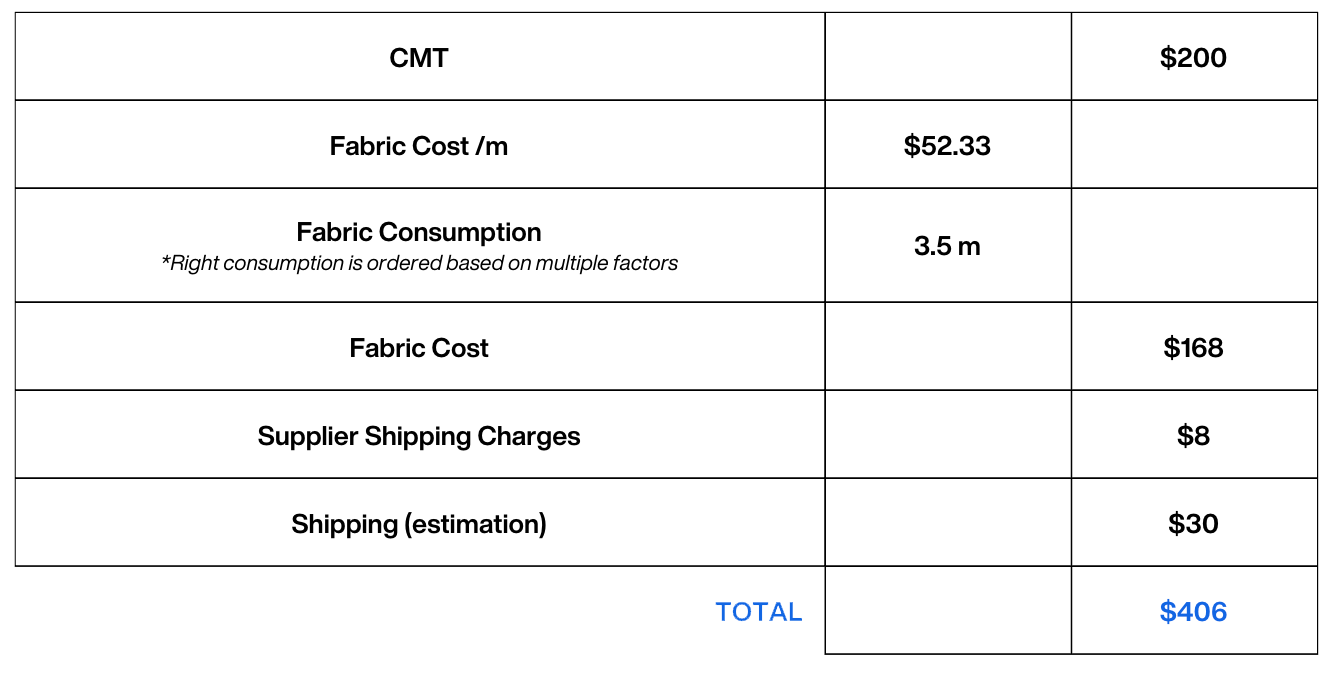
This example represents the real cost to produce and receive the garment. It does not include margin, overhead or revenue for the business.
2. Why MTM Businesses Use Multipliers
In MTM, a fixed dollar markup cannot accommodate the continuous variations in fabric price, consumption, supplier differences and logistics. A multiplier solves this by applying a proportional increase that adjusts to all cost fluctuations.
The industry generally operates within the following multiplier range:
2.5x to 3.5x
The multiplier creates a consistent pricing structure across all product types.
3. Applying the Multiplier to Real Costs
Using the $406 production cost, the retail price becomes:
2.5x produces a retail price of $1,015
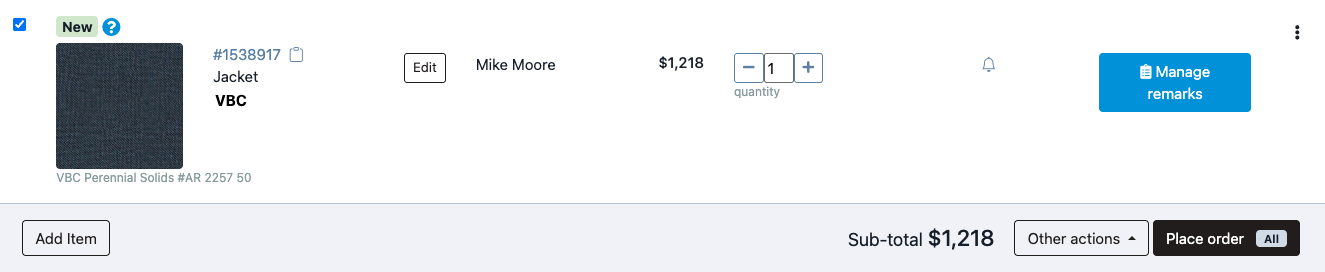
3.0x produces a retail price of $1,218
3.5x produces a retail price of $1,421
This illustrates how the multiplier system automatically aligns retail pricing with the true cost of the garment. It also ensures margin consistency regardless of the fabric selected or the supplier used.
4. Technical Rationale Behind the Multiplier System
The multiplier method provides several operational advantages:
Margin Stability
Retail prices always scale with production costs. This prevents margin compression when fabric or CMT costs increase.
Consistent Positioning
Two garments with different base costs remain aligned in the overall pricing hierarchy. Premium fabrics remain premium relative to entry level options.
Operational Coverage
Multipliers allow businesses to recover overhead and service-related time, including measuring, client communication, alterations, fittings and post-delivery support.
Scalability
As order volume increases, the multiplier applies automatically, reducing the risk of human error and keeping pricing consistent across teams and products.
5. Automated Pricing with MTM.Design
Manual pricing is one of the most time consuming and error prone tasks in MTM. MTM.Design includes an integrated pricing engine designed to simplify this process.
Key Features in MTM.Design Platform
1. Preconfigured multipliers
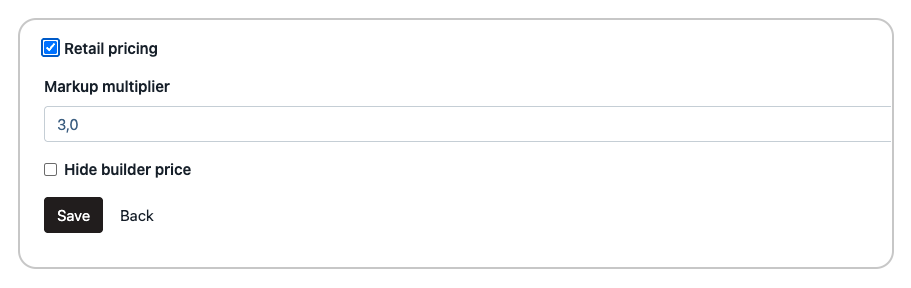
The retail pricing feature allows the brand to choose the multiplier used to calculate client pricing. You can also decide whether or not to display these prices directly in the platform. This creates strong consistency between your offer and what clients see — no more spreadsheets.
2. Real time cost calculation
The platform automatically estimates:
Fabric consumption
Fabric price
CMT
Additional options
Shipping
Supplier fees
3. Instant client facing pricing
Once the multiplier is set, every order displays the final retail price immediately. This eliminates pricing inconsistencies and ensures full transparency with clients.
4. Predictability for financial planning
A consistent multiplier provides clear and repeatable margin data, making forecasting more reliable.
6. Conclusion
Retail pricing in the MTM industry must account for fluctuating production costs. The multiplier method offers a scalable and consistent approach by aligning retail price directly with true garment cost. A range of 2.5x to 3.5x is widely adopted and provides a stable foundation for margin management.
MTM.Design integrates this logic into its pricing engine, allowing businesses to maintain accuracy, transparency and consistency in every order. Users can estimate costs in advance, set their multiplier and allow the system to compute the retail price automatically, which gives both the business and the client a clear and predictable pricing structure.
